One Admin, Two Websites: A Smarter Approach to Custom Website Management
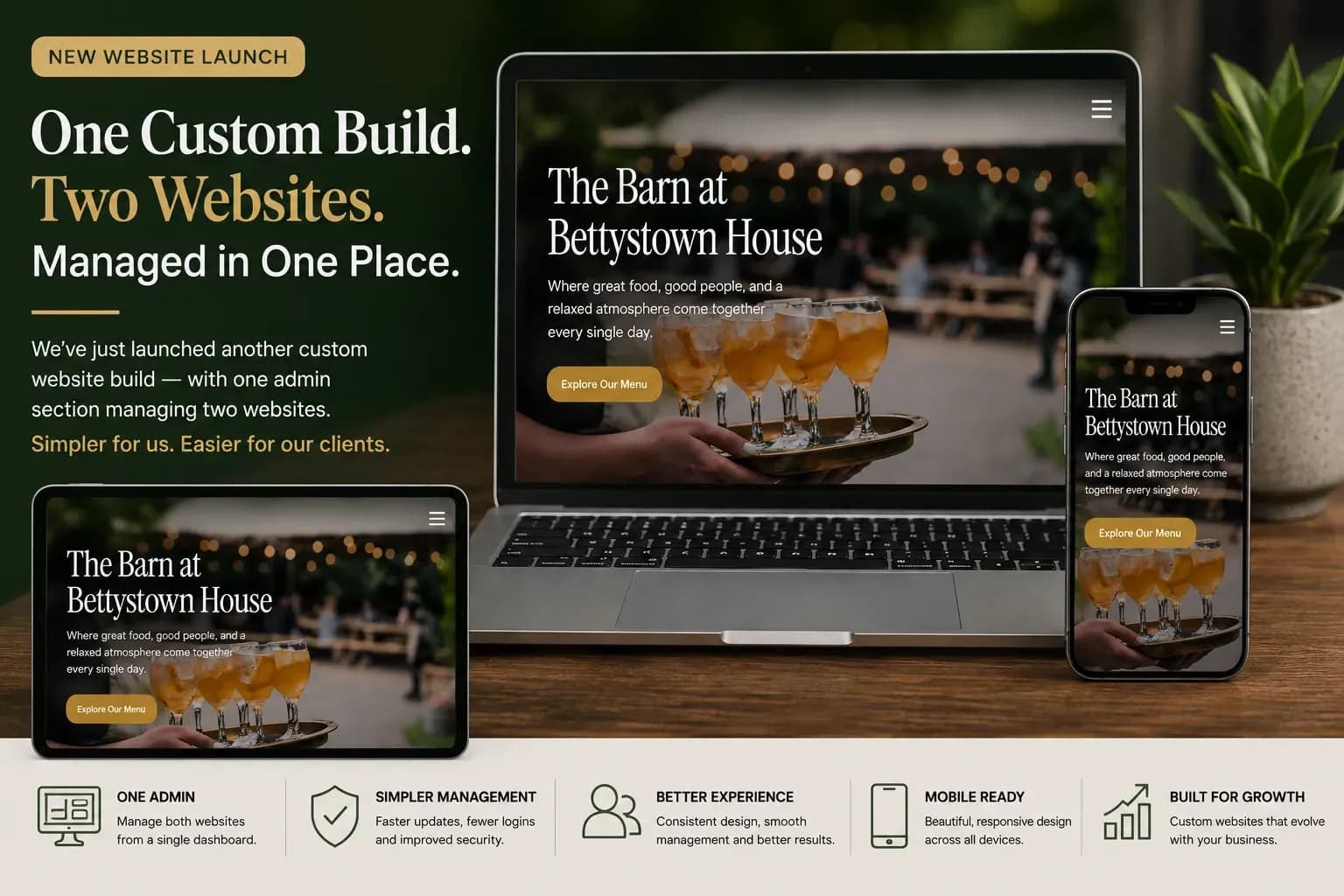
Another custom ManartDigital website is live.
But this project was about much more than creating a new design.
For The Barn at Bettystown House, we built a custom digital setup that allows two separate websites to be managed through one administration system.
One login.
One admin area.
Two websites.
The result is a much simpler way for our client to manage their digital presence.
The Problem: Multiple Websites Usually Mean More Work
When a business operates more than one website, managing them can quickly become unnecessarily complicated.
Different logins.
Different systems.
Separate media libraries.
Different ways of updating content.
Even simple changes can become frustrating.
And as the number of websites grows, so does the amount of administration required to keep everything accurate and up to date.
We wanted to remove that complexity.
The Solution: One Admin Managing Two Websites
Instead of treating each website as a completely separate system, we developed a custom setup where both websites can be managed centrally.
The client has one administration area from which they can manage content across both websites.
This creates a much cleaner workflow.
Rather than asking:
"Which website do I need to log into?"
The client can focus on what actually matters:
Keeping their content current.
Why This Is Better for the Client
Good web development should not only improve what customers see.
It should also improve what happens behind the scenes.
For the client, centralised website management means:
- Fewer systems to manage
- Fewer login details
- Faster content updates
- A more consistent workflow
- Easier day-to-day administration
- Less unnecessary technical complexity
The technology becomes simpler to use, even though the system behind it is more capable.
That is exactly how good custom development should work.
Custom Development Should Solve Business Problems
There is a common misconception that custom web development simply means creating something visually different.
It should go much further than that.
Custom development allows the website architecture and administration experience to be designed around how the business actually operates.
Sometimes that means improving performance.
Sometimes it means integrating another business system.
Sometimes it means automating repetitive work.
And in this case, it meant:
Managing two websites from one place.
The Front End Still Matters
Simplifying administration did not mean compromising the customer-facing experience.
The new website for The Barn at Bettystown House was designed to provide a strong experience across desktop, tablet and mobile devices.
Visitors can quickly discover the venue, explore the menu and navigate the website without unnecessary complexity.
The visual approach reflects the atmosphere of The Barn while maintaining clear navigation and calls to action.
Good website development needs to work on both sides:
For the customer using the website.
And for the business managing it.
Built for Mobile From the Start
A modern hospitality website needs to work exceptionally well on mobile.
Customers may be searching while travelling, deciding where to eat, checking a menu or looking for information shortly before visiting.
That means the mobile experience cannot be an afterthought.
We focused on:
- Clear navigation
- Readable content
- Strong visual hierarchy
- Easy-to-use calls to action
- Responsive layouts
- Consistent branding across screen sizes
The objective is simple:
Make it easy for visitors to find what they need regardless of the device they are using.
Less Dependence on Complicated Plugin Setups
Another advantage of a custom-built approach is greater control over how the system works.
Instead of assembling a website from a large collection of unrelated plugins, functionality can be developed around the actual requirements of the project.
This can create a cleaner architecture and make ongoing development easier to manage.
It also means we can continue improving the platform as the client's requirements evolve.
The website is not treated as a finished project after launch.
It becomes an ongoing digital asset.
One System Creates Better Long-Term Management
The biggest advantage of this project may not be immediately visible to website visitors.
It is operational.
When both websites are managed through the same system, future development becomes easier to coordinate.
New functionality can be planned more strategically.
Content management becomes more consistent.
Support becomes simpler.
And the client does not need to understand the technical architecture behind everything.
They simply have one place to manage their websites.
That is the experience we wanted to create.
Websites Should Be Easy for Clients Too
Website projects often focus almost entirely on the visitor experience.
That is obviously important.
But there is another user businesses sometimes forget:
The person who has to manage the website every week.
If updating basic information requires technical knowledge, multiple systems or contacting a developer every time something changes, the administration experience needs improvement.
A well-built website should make common tasks straightforward.
Technology should remove friction rather than create it.
From Web Agency to Digital Partner
This project also demonstrates why we believe the traditional one-off website model is becoming outdated.
We do not want to simply:
Build → Launch → Leave.
The better model is:
Build → Measure → Support → Improve → Evolve
Business requirements change.
New opportunities appear.
Technology changes.
Customer expectations evolve.
A digital platform should be capable of evolving with them.
That is why we approach projects as an ongoing digital partnership rather than simply delivering a collection of web pages.
What This Project Demonstrates
The new setup for The Barn at Bettystown House demonstrates several principles behind how we approach custom website development:
- Build around the client's actual workflow
- Keep administration simple
- Reduce unnecessary complexity
- Design for desktop, tablet and mobile
- Prioritise performance and usability
- Create systems that can evolve
- Provide ongoing development and support
A website should make running your business easier, not add another complicated system to manage.
Final Thought
Custom development is not about making technology more complicated.
Done properly, it should do the opposite.
The complexity stays behind the scenes.
The client gets a simpler experience.
In this project, that meant taking two websites and giving the client one straightforward place to manage them both.
And that is exactly the type of problem technology should solve.
Managing Multiple Websites or Digital Platforms?
If your business is dealing with multiple websites, disconnected systems, complicated plugins or repetitive administration, there may be a better way to structure it.
At ManartDigital, we build and continuously improve digital platforms around the needs of the business.
Not just websites that look good, but systems that are easier to operate and built to evolve.
Talk to ManartDigital About Your Project
Related Insights
Why Hiring a Web Agency Is Outdated in 2026
SEO Strategy in 2026: What Businesses Need to Prioritise
Frequently Asked Questions
Can multiple websites be managed from one admin system?
Yes. With the right architecture, multiple websites can be connected to a central administration system, allowing content and functionality to be managed more efficiently.
Why would a business want one admin area for multiple websites?
It can reduce complexity, minimise the number of systems and logins staff need to manage, create more consistent workflows and make ongoing website maintenance easier.
Is custom web development better than using plugins?
It depends on the project. Plugins can be useful for many requirements, but custom development provides greater control when a business has specific workflows, integrations or functionality that standard solutions do not handle effectively.
Can custom websites still be easy for clients to update?
Absolutely. In fact, simplifying administration should be an important part of custom development. The client-facing admin experience can be designed around the tasks the business actually needs to perform.
Why is ongoing website development important?
Business requirements, technology, customer behaviour and search expectations change over time. Ongoing development allows a website to adapt rather than gradually becoming outdated.
Does ManartDigital support websites after launch?
Yes. Our approach is based on an ongoing digital partnership, allowing websites and digital systems to continue evolving after the initial launch.